Showing posts with label health. Show all posts

Friday, 19 August 2016

People Become Less Selfish After Age 45, Study Says

Altruistic tendencies—like being truly happy for others and feeling good about giving money away—are stronger in the second half of life, according to a new study that used questionnaires, brain scans, and real-life scenarios to determine people’s motivations behind certain behaviors.
After age 45, researchers found, people tend to give away more money and score higher on personality tests for altruism. The reward centers in their brains also light up more than those in younger people when they witness money going to charity.
The study, by University of Oregon researchers, aimed to combine insight from psychology, economics, and neuroscience. This multidisciplinary approach, they say, led to converging signs of pure altruism in the brain—and helped rule out less genuine reasons people might do charitable things.
RELATED: Why Salt is GOOD for you!
For example, people give away money for plenty of non-altruistic reasons, the authors wrote, such as showing off to others or basking in the “warm glow” one might feel after doing something good. So the researchers’ goal was to find a sweet spot where altruism is done simply for the joy of seeing others benefit, without expecting personal reward or recognition.
To do that, they gave 80 adults $100 each, and asked them to make real-life decisions about giving the money to various charitable organizations or keeping it for themselves. They also performed functional MRI scans on the participants as they watched money being transferred either to their own accounts or to randomly selected charities. Finally, they performed personality tests on each participant.
The researchers found that for some of the participants, their brains’ reward centers were activated more by watching money being transferred to their own accounts than to charities. This suggested a “self-interested” response, said lead author Ulrich Mayr, Ph.D.
RELATED: 15 Stretches You Should Do Every Day
But others’ reward centers were more active while watching transfers to charities. In general, these people also tended to donate more money when given a choice, and scored higher in “pro-social” traits on their personality tests.
The triangulation of these three findings suggests an underlying “general benevolence,” the authors wrote, rather than altruism for personal gains. And, they found, this trifecta was strongest in people 45 and older.
Besides age, the researchers considered other factors, as well: those who identified as religious were slightly more likely to possess general benevolence, while gender and political leaning did not seem to play a role. Neither did annual income—which indicated that older people weren’t more generous simply because they had more money to spend.
RELATED: Nuts May Fight Diseases By Reducing Chronic Inflammation, Study Says
What older people do have, the authors point out, is a greater trove of life experiences. And these experiences, Mayr said in a press release, “may plant the seeds of pure altruism in people, allowing them to grow into the desire to contribute to the public good.”
The study, published in the Journal of Experimental Psychology: General, replicated the results of a smaller University of Oregon study published in 2007. While these new findings are more robust, the authors wrote, larger studies still are needed to support the group's conclusions—and to have real-life implications for psychologists or policymakers.
"[This research] gives us a deeper look at the people who give to charity and altruistically contribute to society," co-author Sanjay Srivastava, Ph.D., said in the press release. "If as a society we want to strengthen communities and have a world where people look out for each other, we can go back and ask what kinds of policies and social conditions can help people get there."

Wednesday, 17 August 2016

15 Stretches You Should Do Every Day

You know that moment when you just need to stretch—maybe it’s before getting out of bed in the morning, during a long flight or right after a long run. Think about how your go-to muscle-loosening move makes you feel. Does it make you say “ooh” and “ahh”? Well, that’s exactly what stretching can do for you: Wake up your muscles, relieve tension throughout the body and make you feel oh-so-good.

But the benefits of stretching go even further. “There are many factors that can limit or enhance movement, including prior tissue damage, strength, stability around the joint and, of course, flexibility,” says Lisa Wheeler, vice president of fitness programming for Daily Burn. “That’s where stretching comes in. If the muscles around the joint aren’t flexible, it’s difficult to move efficiently.” In other words, that stiffness can prevent you from doing full range of motion exercises, cause injury and worse, keep you from progressing with your fitness goals.
To help you loosen up the joints used in most daily movements—especially those that get tight from sitting all day—we rounded up 15 lengthening and strengthening stretches to do daily. Wheeler says it’s best to do a dynamic warm-up before a workout and static holds after exercise. Thankfully, you can use most of these stretches for both by either staying in the position shown for 30 seconds (static) or moving in and out of the pose (dynamic). Focus on deep breathing and you’ll probably experience some mental stress relief, too.

15 Stretches to Relieve Tension Now   

http://cdn-img.health.com/sites/default/files/styles/large/public/1471283142/downward-dog-yoga-pose-daily-burn.jpg?itok=sVZjgHwn
1. Downward Dog
A yogi favorite, this pose focuses on hip and shoulder mobility, while stretching your hamstrings, lats (muscles in your mid-back) and deltoids (muscles in your shoulders).
How to: Start in plank position with shoulders directly over wrists (a). Push your hips up toward the ceiling so you form a triangle with your body. Keep your head between your arms and straighten your legs as much as possible (b). Reach your heels toward the ground and spread your fingers, so your bodyweight gets distributed evenly through the hands and feet.
Make it dynamic: Continuously move between plank position and downward dog.
http://cdn-img.health.com/sites/default/files/styles/large/public/1471283142/side-oblique-stretch-yoga-pose-daily-burn.jpg?itok=DA_1eF_Y
2. Side Oblique Stretch
You’ll lengthen through the side of your body as you stretch your lats, hips and obliques.
How to: Stand with feet a little wider than hip-distance apart (a). As you lift one arm overhead with your palm facing inward, reach and lean toward the opposite side of the arm raised (b). Hold for eight seconds, then switch sides.
Make it dynamic: After you reach with one arm, bend that elbow as you pull it down by your side and stand straight. Reach back up and over. Do eight reps, then switch sides.

http://cdn-img.health.com/sites/default/files/styles/large/public/1471283142/crescent-pose-yoga-daily-burn.jpg?itok=CseoIiPf
3. Crescent Pose
Find length and balance as you engage your abs, hip flexors and chest with this high lunge.
How to: Stand with your feet staggered: one in front and one behind you (a). Bend your front knee to create a 90-degree angle. Keep your back leg straight behind you (b). Lift your arms up in the air by your ears, palms facing inward. Lift your chest up, slightly arching your back as you press your back hip forward (c). If possible, lower your lunge as you exhale. Hold for eight seconds, then switch sides.
Make it dynamic: Bend and straighten your front leg as you lift and lower your arms. Repeat for eight reps, then switch sides.

http://cdn-img.health.com/sites/default/files/styles/large/public/1471283142/childs-pose-yoga-daily-burn.jpg?itok=u89c4Ifn
4. Child’s Pose
Take it from Daily Burn’s Becca Pace: This stretch is probably one of the most calming postures, and works well for recovery, too. You’ll stretch the low back, lats and shoulders.
How to: Get on all fours on an exercise mat (a). From your hands and knees, push your hips back until your butt rests on your heels. (Knees slightly wider than hips.) Keep your arms straight out in front of you and look at the floor.
Make it dynamic: Continuously flow through hands-and-knees position to child’s pose.

http://cdn-img.health.com/sites/default/files/styles/large/public/1471283142/single-leg-stretch-yoga-pose-daily-burn.jpg?itok=rEajBkcM
5. Single Leg Stretch
If you’re like most adults, you need a little more flexibility in your hamstrings. Bonus benefit: You’ll also work your core.
How to: Lie on your back and lift legs toward the ceiling (a). Lower one leg toward the floor as you pull the other leg toward your face (b). Hold the back of your raised leg (calf or higher) and lift your shoulders off the mat (c). Keep legs as straight as possible and toes pointed. Hold, then switch sides.
Make it dynamic: Switch legs repeatedly, gently grabbing your calf and pulling it toward you.

http://cdn-img.health.com/sites/default/files/styles/large/public/1471283142/seated-yoga-pose-daily-burn.jpg?itok=8BVvdaTp
6. Figure 4
This is an ah-mazing stretch for runners, as it alleviates tightness in the glutes and the hard-to-reach piriformis (another muscle in your backside).
How to: Sit on a mat with your legs extended in front of you (a). Place your hands behind you, fingertips facing away from your body. Lift one leg, placing your ankle on your opposite leg, just above the knee. (Keep your feet flexed to protect your knees.) (b). Slowly bend your bottom leg toward you, until you feel a stretch in the outer hip of the other leg (c). Straighten your back, roll your shoulders down and push out your chest. Hold, then switch sides.
Make it dynamic: Continue to bend and straighten your bottom leg.

http://cdn-img.health.com/sites/default/files/styles/large/public/1471283142/cat-yoga-pose-daily-burn.jpg?itok=eRU_pf-f
7. Cat
Have a stiff back? This pose will encourage blood flow and more mobility in your spine.
How to: Get on your hands and knees on an exercise mat, with wrists in line with shoulders and knees in line with hips (a). Round your back, tuck your pelvis and look toward the floor, as you scoop your abs upward (b).
Make it dynamic: Inhale and exhale as you flow through cat and cow (below).

Tuesday, 16 August 2016

Nuts May Fight Diseases By Reducing Chronic Inflammation, Study Says

cashew-bowl-chronic-inflammation
It looks like President Obama has the right idea. Eating nuts on a regular basis may reduce harmful inflammation throughout the body, finds a study published last week in the American Journal of Clinical Nutrition. The finding suggests a possible explanation for why nuts, in previous research, have been linked to longer life and lower rates of heart disease and diabetes.
The new analysis looked at the health records and dietary habits of more than 5,000 men and women taking part in either the Nurses' Health Study or the Health Professionals Follow-up Study. Specifically, researchers wanted to see if people who ate more nuts had fewer markers for inflammation, such as C-reactive protein (CRP) and Interleukin 6 (IL6), in their blood. (Both of these compounds increase in the body when inflammation is present, and inflammation is known to be a contributor to chronic disease.)

Their hypothesis rang true: They found that people who ate nuts five or more times per week—and people who swapped in three servings of nuts per week in place of red meat, eggs, or refined grains—had lower levels of CRP and IL6 than those who almost never ate nuts.

Lead author Ying Bao, MD, an epidemiologist at Brigham and Women’s Hospital and Harvard Medical School, says that nuts have many healthful components—including magnesium, fiber, antioxidants, and omega-3 fatty acids. It’s not known which of these are responsible for nuts’ apparent anti-inflammatory benefits, she adds, but says she’d like to explore this question in future studies.
The study, which was supported by a grant from the non-profit International Tree Nut Council Nutrition Research & Education Foundation, builds on previous research, says Dr. Bao, “offering another reason to enjoy eating nuts.”
It’s important to remember, though, that nuts are high in calories, so bigger servings aren’t necessarily better. “I think people should be conscious of not going overboard and stick to the current American Heart Association recommendation of a handful of nuts per day,” she adds.

Participants didn’t provide details in this study about how big their servings were or how, exactly, they substituted in nuts for other foods. But examples might include swapping walnuts for croutons on your salad, a peanut butter sandwich for a BLT at lunchtime, or almonds for cheese and crackers as a pre-dinner snack.
No matter how or when, most people can afford to add more nuts to their diet. A 2014 study found that only 4 in 10 Americans were eating them on a daily basis.

What to Eat After a Late-Night Workout


night-running-working-water-bottle
I’m a total night owl, so hitting the gym at the crack of dawn has never worked for me. I typically get a big burst of energy in the evening, and usually work out well after the sun goes down. Many of my clients also enjoy late-night workouts, but they always have one burning question for me: "What should I eat afterward, if anything?"
My standard advice: Don't starve yourself post-workout. You need to eat something to replenish nutrients, and help your body recover from physical wear and tear. Forgoing fuel can leave you weaker, vulnerable to injuries, and prone to sleep problems.
But that said, if you know you're going to bed soon, it's not a good idea to chow down on a massive meal. Instead, here are six fast and simple options rich in nutrients, lean protein, and healthy fat—to support (not undo) your hard work at the gym.

Hummus with raw veggies

Reach for traditional hummus or mix things up with a version made from black beans, lentils, or white beans. Whichever variety you choose, scoop it up with sliced bell pepper, cucumber, grape tomatoes, or another in-season vegetable you like.

Salmon and veggie salad

Mix just an ounce or two of canned wild salmon with a small handful of baby spinach and a tablespoon of olive tapenade. Spoon it into an outer romaine leaf, or eat the tasty mixture on its own.

Roasted chickpeas

Toss a handful of chickpeas with a bit of extra virgin olive oil and a pinch of sea salt. (It's fine to use canned chickpeas; drained, rinsed, and patted dry.) Bake on foil in the oven or toaster oven until golden brown.

Egg salad

Chop a few organic hard boiled eggs, and toss with chopped veggies (like minced kale or shredded zucchini) and a small dollop of tahini or pesto.

Chilled shrimp with guacamole

Thaw five or six frozen, ready-to-eat shrimp and dip them into a quarter cup of guacamole. Just make sure the guac isn't too hot, since spicy foods can interfere with sleep.

Nuts or seeds

A perfect post-workout serving of nuts or seeds is a quarter cup, about the size of a golf ball. (If they're in the shell, use a half cup.) My favorites are almonds, pistachios, walnuts, pumpkin seeds, and sunflower seeds. Another option: a few level tablespoons of nut or seed butter, scooped up with celery.
Do you have a question about nutrition? Chat with us on Twitter by mentioning @goodhealth and @CynthiaSass
Cynthia Sass is a nutritionist and registered dietitian with master’s degrees in both nutrition science and public health. Frequently seen on national TV, she’s Health’s contributing nutrition editor, and privately counsels clients in New York, Los Angeles, and long distance. Cynthia is currently the sports nutrition consultant to the New York Yankees, previously consulted for three other professional sports teams, and is board certified as a specialist in sports dietetics. Sass is a three-time New York Times best-selling author, and her newest book is Slim Down Now: Shed Pounds and Inches with Real Food, Real Fast. Connect with her on FacebookTwitter and Pinterest.

Monday, 15 August 2016

3 Nutrition Benefits of Tigernuts

Meet my new friend, Tigernuts!

Recently, I discovered a new food I could eat. It’s crunchy, sweet and altogether delicious. And it has a ton of nutritional benefits.
For someone like me, who has to stick to a very limited diet, that’s a big deal!
I’m excited to introduce you to Tigernuts from Organic Gemini and I’m sure that you will enjoy them whether or not you follow a specific nutrition protocol. This giveaway is graciously sponsored by Organic Gemini.
You can find Organic Gemini Tigernuts on Amazon here.

What Are Tigernuts?

Tigernuts are a misnomer, because these aren’t nuts. They are actually a vegetable – a type of starchy tuber. Tigernuts are also called chufa, nut grass, or yellow nutsedge.
I call myself a Traditional Foodie, meaning that I believe we can gain vital nutrition insight by studying the dietary habits of ancient cultures. When it comes to traditional foods, tigernuts take the cake. Oxford University recently discovered that tigernuts played a key nutritional role in our evolution from pre-human to human. So tigernuts are about as Paleo a food as you can get!
Tigernuts were a highly valued food in ancient Egypt. Interestingly, there is ancient Egyptian art depicting the careful sorting of Tigernuts.
You may be wondering, What do tigernuts taste like? They taste sweet! Granted, I’ve been off refined sweeteners for years so my palate is very sensitive to natural sugars. I also taste a slightly nutty, earthy, vanilla flavor. I absolutely love the taste.

3 Nutrition Benefits of Tigernuts

3 incredible nutrition benefits of tigernuts (they're tubers, not nuts!)1. Allergen free – Tigernut allergies are probably one of the rarest food allergies ever. Since they are a tuber, tigernuts are completely soy, dairy, grain, nut, seed (etc, etc.) free. Further, Organic Gemini has a dedicated gluten-free, peanut-free and tree nut-free facility to prevent cross-contamination.
2. Resistant Starch – Tigernuts are the highest whole food source of a unique type of fiber called resistant starch. Besides the pleasant flavor and texture, the resistant starch content is why I eat tigernuts on a regular basis. Resistant starch is a highly beneficial pre-biotic, which means it feeds the good bacteria in your digestive tract.
Resistant starch has been a hot topic lately in the health world as more and more research shows the unique benefits of this plant fiber. For example, research indicates that resistant starch could be a powerful component in preventing and/or addressing diabetes and obesity! You can read more in this post on ChrisKresser.com.
One thing to keep in mind, however, is that introducing resistant starch for the first time may produce some symptoms of a shift in gut flora. You may wish to introduce tigernuts gradually and see if you experience symptoms such as gas or bloating. If you do, slowly but consistently increase the amount of tigernuts starting at just one or two a day.
3. Healthful Fats – Unlike other starchy vegetable tubers such as potatoes, tigernuts are a good source of healthful fats. Tigernuts have a fatty acid composition similar to olive oil, with the fat composition being about 73% monounsaturated fat, 18% saturated fat and 9% polyunsaturated fat (source). The lower percentage of polyunsaturated fat, which can be highly inflammatory, in contrast to the specific monounsaturated and saturated fats (both nourishing, non-inflammatory types of fat) makes a healthy fat profile.

How I prepare Tigernuts

Ever since discovering Organic Gemini tigernuts a month ago, I’ve created a simple ritual to enjoy them each day for their resistant starch. This is my favorite way to prepare the tigernuts because I love the crunchy texture and sweet flavor of eating them whole. They are very satiating and pleasant to eat. Since I don’t eat crunchy snack foods like potato chips or popcorn, this seems to fill my cravings for something bite-sized and crunchy.
Organic Gemini Tigernuts are dried for shelf-stable storage. As a result, they must be rehydrated in water prior to eating or using in a recipe.
  1. I start by soaking about one ounce (a very small handful) of tigernuts in a small bowl of filtered water for at least 12 hours. It looks like a very small quantity but they expand once soaked. Additionally, a huge amount of nutrition is crammed into each figernut.
  2. In the morning, I drain the liquid and eat the tigernuts with my breakfast. It’s been my daily ritual for the past few months.
  3. After breakfast, I add another ounce of dry Tigernuts to the bowl and cover with filtered water. They will be ready for me the next day.
Some people prefer to soak the tigernuts for up to 48 hours. Experiment and find the soaking time that you prefer. I like the chewy, crunchy texture of a 12-hour soaking period.
3 incredible nutrition benefits of tigernuts (they're tubers, not nuts!)

Tigernut Horchata

Besides eating them whole, you can also prepare a traditional beverage called Horchata with tigernuts. After soaking, the tigernuts are blended with water and a dash of sweetener to create a creamy and dairy-free drink.
Organic Gemini carries their own line of Horchata, which is available in select Whole Foods locations as well as Dean and Deluca. It’s a creamy, dreamy treat… you’ll be hooked once you try it! Even better, it’s allergy-friendly. The Unsweetened version is just tigernuts and filtered water. The Original gets a touch of sweetness from organic dates.
Want to make your own Tigernut Horchata? Jenny at Nourished Kitchen has a tasty Tigernut Horchata recipe here if you are interested.

Tigernut Flour

Organic Gemini just sent me some of their tigernut flour, their newest addition to their line of tigernut products. It’s available here on Amazon. I’m always on the lookout for grain free flours, so I’m excited for this new option! For me, it will be a welcome alternative to my staple coconut flour.
3 incredible nutrition benefits of tigernuts (they're tubers, not nuts!)
I haven’t had a chance yet to experiment with the flour, since I literally just got it in the mail, but I’m planning to dabble with it this week. Evidently, it substitutes 1:1 for white flour, but I haven’t found this out for myself yet.
Keep your eyes out for my future recipes featuring tigernut flour, because I know I will have fun playing with this new ingredient.

Where To Buy Tigernuts

  1.  Get Organic Gemini Tigernuts here on Amazon and their Tigernut Flour here on Amazon.
  2. Select New York Whole Foods locations carry Organic Gemini Tigernuts

New Study Reveals How Immune System Affects Social Behavior

New Study Reveals How Immune System Affects Social Behavior


It had long been thought that the brain is a special place in the body, largely sealed off from the immune system. We talk about the blood-brain barrier and the "immune privileged" status of the brain, as though it exists in another dimension, totally out of reach. Neurons, we were told, were too precious to risk being lost in a street fight with a virus or bacteria, so the brain must be in some sort of protective bubble, isolated from both infections and immune activity.
Allan Ajifo/Flickr
Source: Allan Ajifo/Flickr
As so often happens in science, the reality has proven far more complex. Increasingly, we are discovering new connections between the nervous and immune systems.
We should have known better. One of the most fundamental aspects of immune defense, fever, is well known to affect both our mood and behavior, things that are seated squarely in the brain. When you are running a fever, you just feel different. You lose appetite, energy, and even enthusiasm for things that you normally enjoy. You feel terrible. This is no accident and it is not due to the elevated body temperature itself. Strenuous exercise on a hot day can raise body temperature even more than fever usually does, yet it does not cause lethargy.
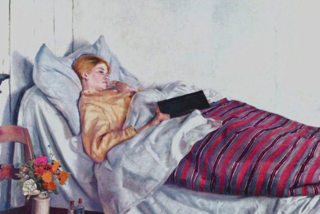
We don't often think of it this way, but the feelings associated with fever are psychological symptoms. It changes our mood and our subjective inner feelings, but it also alters our behavior. We are less likely to leave the house, do any work, or even socialize. We just want to lay in bed and rest. The evolutionary value of this is obvious. By nudging us toward rest, we conserve valuable energy for the immune fight. The psychological symptoms of fever have probably saved many human and animal lives.
Michael Ancher, "The Sick Girl," 1882, Statens Museum for Kunst
Source: Michael Ancher, "The Sick Girl," 1882, Statens Museum for Kunst
There may also be a social aspect to fever. By knocking us off our feet, fever may act to reduce our interactions with others. This would be clever indeed because, if the infection is contagious, this could help reduce its spread to other members of our group. In most cases, among the people we interact most with are our close biological relatives.
The idea that immune activity can alter our social behavior just got a big boost. Researchers at the University of Virginia have discovered how a very important immune molecule, interferon gamma, has direct and profound affects on social behavior in mice.
Interferon gamma (IFN-γ) is one of the most famous of all immune system molecules. It is a powerful anti-viral protein that can have pronounced effects on almost every cell in the body. It is both a warning beacon, telling cells that an infection is brewing, and a master regulator of the immune response itself. IFN-γ is released by various kinds of white blood cells whenever an infection is detected. When it touches other cells, it forces them to put up their defenses and engage in a whole host of defensive activities designed to stop, fight, and destroy an invading pathogen. Powerful stuff.
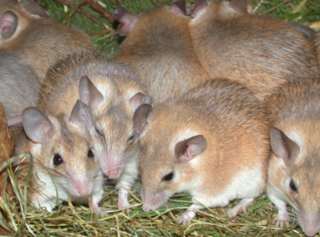
What the researchers found was that perturbing the interferon gamma signaling network makes mice less social. Importantly, the reduced sociality appears to be a direct effect, not a consequence of motor defects or increased anxiety. IFN-γ seems to operate specifically on the desire to spend time with others. The scientists went on to place IFN-γ within a signaling network in the brain that specifically links immune activity with social behavior, demolishing any notion of a barrier between the brain and the immune system.
Andy Mabbett/Creative Commons
Source: Andy Mabbett/Creative Commons
The implications are far reaching. It is compelling that IFN-γ could operate to reduce the sociality of mammals when they are fighting infection. This would go above and beyond the connection to fever. A common feature of immunology is overlapping mechanisms to accomplish similar goals. This is because our immunity has evolved over millions of years of struggle against also-evolving viruses and bacteria. In fact, if this finding is confirmed, I suspect that virologists will soon discover ways that viruses try to deactivate this action of IFN-γ in order to boost social interactions in their hosts, facilitating contagion.

There is also an implication for the study of social personality types and neurodiversity. Thoughtful study of those on the autism spectrum has led to a shift in thinking away from the "disorder" model of autism and toward the "neurodiversity" model. Briefly, many now believe that the autism spectrum is actually just one end of a continuum of personality types that includes neurotypical personalities as well.
Through random mutation, evolution is a diversity-creating machine. It seems possible, likely even, that personality and neuro-functioning would be part of that diversity. After all, the genius of human biology is that we're not evolved to be any one specific kind of thing. Our greatness is our adaptability. With our powerful brains to guide us, we are the planet's ultimate generalists. For that, diversity is essential.
Besides its role during infection, interferon gamma also seems to operate at a different baseline in each of us. There has been speculation that the different levels of baseline IFN-γ activity may explain why some are prone to exaggerated allergic and immune responses and might predict who survives an episode of sepsis and who doesn't. IFN-γ levels may even correlate with general sickliness, though a genetic basis for this has not yet been discovered.
However, with the knowledge that IFN-γ also has a direct effect on social behavior comes the implication that it may have a role in personality and neurodiversity. If the diversity in IFN-γ levels correlate with the diversity of social behavior, a key mechanistic connection will have been made. However, this begins to sound a little too neat, in my view, keeping in mind the lesson that began this story: life is rarely as simple as our ideas are.
Nevertheless, the emerging picture of a common biology to immunity and social behavior is a compelling story of the creative genius of evolution. The next time an infection has got you down, bear in mind the good that IFN-γ is doing for your loved ones by acting on your brain and keeping your sick body away from them.


Wednesday, 3 August 2016

Reasons Why Breast Cancer Is Better Than Depression

Reasons Why Breast Cancer Is Better Than Depression

http://clients.domainking.ng/aff.php?aff=553&p=web-hosting
Here are 7 reasons why breast cancer is better than depression:
  1. I didn’t suffer in silence and wasn’t alone with breast cancer. People eagerly helped me at every turn. Friends cooked meals, drove me to doctor appointments, and cleaned my house. Dozens of others who have been down this road offered to help me again and again. When I suffered from depression, I felt alone.  Even my boyfriend who knew I was suffering and had also been in therapy for depression could not help me. I kept hoping that I’d wake up each morning and be myself again.  I had no idea what I needed to do to get well. I was lost and alone. I couldn’t function.
  2. I wasn’t ashamed about having breast cancer.  Having depression made me feel that I’d let down my loved ones. Well-meaning friends encouraged me to cheer up, as though my sickness was an option. “You’ll get over it,” they said. No one understood what had happened to me. I felt judged.  I was trapped inside a very sick body. My speech was flat. I’d become so small inside that I could barely find me anymore. I dragged around a dead weight called my body. Then, when I tried to end my life, I was forced to appear in court. I’ll never be given a court summons because of breast cancer. And, when I told people I had breast cancer, they said, “Oh my God – how scary!”
  3. Cancer didn’t threaten my professional occupation. No one questioned my ability to do my job with the news of my cancer diagnosis. Depression lives in the brain. When I attempted suicide, people told me not to tell my employer as it would reflect poorly on my record and leave me vulnerable to losing my job. Long after I returned to work, I didn’t talk about the reason for my absence. With cancer, there was no need to keep my health a secret. I was reassured I can take off as much time as I need to deal with the cancer treatments and the process of healing. My co-workers have been very understanding and have given me ongoing support, enabling me to work while receiving treatments.
  4. Many reputable and nationally known health care providers eagerly sought me as a customer. When I had depression, finding good resources was nearly impossible. Even as a licensed social worker, I was not prepared for getting sick or understanding how stuck I was going to be with receiving the treatments I needed. My family struggled to find care providers, yet they didn’t get the right guidance. There were no commercials on television or radio spots announcing the best place for helping patients after a suicide attempt. My sister made many phone calls before she found a competent psychiatrist who had availability to see me.  No providers took insurance. The cost of the first visit was $225.  Even my family doctor didn’t know how to help me. He started me on an antidepressant, but had neither the training to care for me nor the connections in the community to get me the care I needed.  With cancer, it’s different. Cancer screenings and referrals are routine. I will be seen by an oncologist for the rest of my life, and the visits will be 100 % covered by insurance.
  5. There is solid science and good public information about breast cancer. There are public service announcements, newspaper articles, and television programs, all warning people about cancer threats.  Not so with mood disorders.  While the effect to integrate behavioral health into primary care is slowly taking place, most family doctors still do not have clear guidance for diagnosing and treating mood disorders. They get most of their information from drug representatives. The science behind many of the medications is not well understood, especially in selecting one that will likely work for a specific individual. There are not enough highly skilled psychiatrists and therapists aggressively treating depression and other mental illnesses.
  6. My pain and suffering with breast cancer was intermittent. My pain, immobility, agony, and suffering with clinical depression were constant. There was no real reprieve from the disability from my depression. When I was depressed, I was helpless and impaired. I couldn’t manage day-to-day task. With cancer, my physical discomfort and, even my emotional suffering, came and went. My sadness fluctuated appropriately. With depression, every moment awake took an effort to be alive.
  7. The survival rate is better for cancer than clinical depression.About 40,450 women in the U.S. died in 2015 from breast cancer,* though death rates have been decreasing since 1989. Women under 50 have experienced larger decreases. These decreases are the result of treatment advances, earlier detection through screening, and increased awareness. Contrast these survival rates with those for mental illness. 90% of all people who die by suicide have a diagnosable mental illness prior to their death. In 2014, there were 42,773 suicide deaths.
http://clients.domainking.ng/aff.php?aff=553&p=web-hosting
Being treated for breast cancer wasn’t a day at the beach. Often I was weary. Sometimes I was in pain. Almost daily, my stomach was upset. But I never lost my sense of humor or my ability to spend good-natured time with my family or friends. I remained capable of making decisions about my health care because I could absorb the information provided and often was motivated to research more.
I will live with both breast cancer and depression for years. I’ll be vigilant about monitoring myself for potential relapses and will continue to take my medications as prescribed.
But yes, having breast cancer was better than having a major clinical depression.

  FOLLOW CUKANAIJA ON FACEBOOK AND TWITTER or link to post if you are a blogger

is inSomniA A disease? And why?

What Is Insomnia? 


Almost everyone goes through bouts of sleeplessness from time to time. It happens to the average person about once a year. That's the cost of being human and having the capacity to worry about the future and chew over the past.
Chronic insomnia, however, is marked by difficulty falling asleep or staying asleep, or waking up too early. If it takes you thirty minutes or more to fall asleep, or you're awake for thirty minutes or more during the night at least three times a week–for a month or more–you're offically suffering from insomnia. Nearly 10 percent of the U.S. population experiences chronic insomnia, according to the Centers for Disease Control and Prevention.
Insomnia has major effects on mood as well as alertness. It is also a classic symptom of depression.
Short-acting sleeping pills may improve sleep and next-day alertness. But the best way to handle a bout of insomnia is to do nothing; the body's sleep mechanism tends to right itself, if given the chance.
The most effective treatments for chronic insomnia are behavioral techniques that eliminate sleep anxiety and allow the body's own sleep cycle to kick in.

 When Sleep Is Not Enough

Like depression, insomnia used to be treated as a symptom of “something else.”  Not anymore.  At this year’s national sleep meetings in Denver, it became clearer how big a national and international problem insomnia is – as well as how to fix it.
 As insomnia researcher  Charles Morin pointed out, the distinction between “primary” and “secondary” insomnia is gone.  Insomnia afflicts people – and many of the people around them – through effects that affect much of modern life.
 If you don’t feel you get enough sleep, there can be hell to pay.  Here are a few examples:
Economic – people with insomnia are unhappy, irritable, more prone to accidents and errors of judgment, and less productive.  They are also less helpful to their colleagues.  Though the problem is worst at the bottom of the economic scale, with people trying to commute and work to three part-time jobs choosing between time asleep or time for work and family,  CEOs are also hit.  The reason?  International travel and 24/7 schedules.  Humans are not machines.  We just try to act like we are.  One of the biggest “trends” for CEOs are executive trainers who specialize in “getting people sleep” and overcoming jet lag. It's not just shift workers now.  Biological clocks have arrived in the executive suite.
Medical – People who get sick – whether it’s colds or cancers – sleep less effectively, and take longer to regenerate themselves.  A big trend in insomnia research is the realization of how much insomnia affects cardiovascular disease, through more hypertension and heart attacks.  As is often the case with insomnia, there is an endlessly increasing dialectic – more medical problems make for more insomnia, and more insomnia makes for more medical problems.
Psychiatric – Ever since Boris Angst in Zurich showed how a third of insomniacs eventually become depressed, people have been paying attention.   According to Morin, insomnia doubles the rate of depression, a finding consistent throughout the world.  Tom Wehr in the US showed two decades ago he could manipulate mania or depression by changing people’s sleep times.  If you want to see schizophrenia burst out in its full, naked form, observe people who consistently can’t sleep.
Military – sleep in armies and navies gets too little attention.  Soldiers in combat zones often sleep poorly.  Ongoing research by the US military demonstrates how this sets up soldiers to make potentially catastrophic errors, both military and moral.  Plagued by traumatic brain injury and post-traumatic stress disorder, the American military now recognizes it has huge sleep problems.  Insomnia is the thread that runs through most of them.
Sleep deprive an animal long enough and it dies.  Those experiments have not been done in people – very thankfully.  But mess up rest and all kinds of bad things happen, to ourselves and our communities.  Fortunately, the right treatments work.

         Treatment

Worldwide, the most common treatment for insomnia is pills.  The most effective treatment is cognitive-behavioral techniques for insomnia, or CBTi.  This mismatch leads to much mayhem.
Looking at the data of Dan Kripke, an emeritus professor at the University of California, San Diego, regular sleeping pill use is associated with a mortality odds ratio of five – five times the death among people using sleeping pills as compared with controls.  Other studies have found somewhat lesser fatality numbers, but they remain scary.  People regularly using sleeping pills have higher death rates in cardiovascular disease; accidents; even cancer.
The CBTi approach generally starts with behavioral techniques.  That means teaching people about biological clocks and how to sleep, something many in the internet age have forgotten.  Machines can go full blast all day.  We can’t. We need rest like we need food.  Teaching people the basic principles of sleep is now gaining more attention, one of the reasons I started sleepuniversity.org.
Following behavioral techniques, people learn cognitive ones – how their thinking about sleep changes their sleep.  Combining behavioral with cognitive techniques, people learn how to approach sleep in terms of solutions, not just problems.  They recognize that staying in bed when you can’t sleep doesn’t help. They learn that not every night of sleep is not perfect.  They begin to see how body clocks influence so much of their lives.  They figure out ways to think differently, not just about sleep, but about health in general.
CBTi is now used all over the world in hundreds of different configurations.  Many companies are putting it out on the web.  Manuals short and long exist by the truckload.  It’s not just effective, it’s cheap.
The profit margin on sleeping pills is much, much greater.

         The Future

Insomnia researchers, like depression researchers before them, are trying to subtype different kinds of insomnia.  They’re trying to figure out how it occurs,  including the realization that in insomnia not all of the brain is “asleep” when people think they’re sleeping.
Yet the basic teaching is simple.  We need sleep to live.  To sleep well we have to treat our bodies as bodies, not machines.  And for the 10% of the population that already has bad insomnia, the most safe and effective treatments don’t involve drugs.

Sure Risk of Relapse to Alcohol Drops After 5 Years of Sobriety-Health

 Sure Risk of Relapse to Alcohol Drops After 5 Years of Sobriety

After 5 years of abstinence, a former alcoholic has approximately the same risk of relapse as a member of the general US population has of developing alcoholism.1 Let’s unpack this claim, and consider what it means for those who struggle with addiction. This article will review the academic literature pertaining to addiction and remission. For a more complete discussion, please read, “Risk of Relapse Declines Significantly after 5 years of Abstinence from Alcohol,” published on Neuraptitude.org.1
Alcoholic is a poorly defined colloquialism that we chose to include in our introductory proclamation for the simple fact that it is more widely known than the scientific term, alcohol use disorder.2 Instead of introducing more points of potential confusion, we will stick with the terms alcoholic and alcoholism rather than defining the more scientifically accurate, and precise term, alcohol use disorder. We will consider an alcoholic to be an individual for whom alcohol use causes significant biological, psychological, or sociological impairment in functioning.
The exact quantity of alcohol consumed is less important to the development of alcoholism than is the effect alcohol use has on an individual’s functioning. However, to get a ballpark quantification of hazardous consumption, we can consider the construct of risky alcohol use. Risky alcohol use corresponds with the amount of alcohol consumption that presents a risk to an individual’s health.3 Risky alcohol use is defined as >14 drinks per week or >4 drinks in a day for men <65 years old, and >7 drinks per week or >3 drinks in a day for women <65 years old.3
Greg Becker | Unsplash.com
Source: Elijah Hail | Unsplash.com
There is a popular and prejudicial belief within our culture that an addict is always an addict, even after sustaining long-term abstinence. From a neurobiological standpoint, this belief does contain a kernel of truth in that the predisposing organic factors that render an individual susceptible to developing an addiction are unlikely to be completely corrected during the recovery process. This is why patients who are in remission from an addiction are strongly advised never to return to using the substance. However, the veracity of the addict is always an addict presumption begins and ends with the aforementioned caveat.
Addictive substances and behaviors hijack an evolutionarily ancient set of structures with the brain, which developed over millions of years to ensure our very survival. Thus, driving substance abuse into remission is an enormous, but not impossible, task. That being said, many do achieve and maintain remission.

Long-term remission from substance abuse is very difficult to study for numerous reasons, not least of which is the duration of follow up required to obtain valid results. There are only a small number of studies that have successfully gathered the data necessary to draw preliminary conclusions regarding the relationship between the duration of abstinence and the risk of relapse.1
Studies of remission in alcoholism have generally suggested that after 5 years of abstinence, the risk of relapse is around 15%.4,5 And in a cohort of patients who achieved remission from a wide array of substances, including alcohol, only 14% relapsed after 3 years of abstinence.6 There are clearly limitations to the cited data, and further study is required before any firm conclusions can be drawn, but the data available suggests that 5 years of remission seems to predict a relapse risk of around 15%.1
Now, let’s turn to the second part of our initial proclamation and examine the 1-year prevalence of alcoholism in the US.
In a recent study, Grant et al. found that the prevalence of alcoholism in the general US population over a 1-year period was 13.9% for 2012-2013.7 Data from the same data set circa 2001-2002 found the 1-year prevalence of alcoholism to be 8.5%.8 Although the prevalence of alcoholism is notably higher in the 2012-2013 data set, there are numerous reasons to believe that the more recent data is nonetheless valid.6
Elijah Hail | Unsplash.com
Source: Elijah Hail | Unsplash.com
So to summarize, the risk of relapse after sustaining remission for 5 years is around 15%, and the 1-year prevalence of alcoholism in the general population is 13.9% per our most recent estimates (range: 8.5-13.9%). We can revise our initial proclamation to more specifically assert that after 5 years of abstinence, a remitted alcoholic has approximately the same risk of relapse as a randomly selected member of the general US population has of experiencing alcoholism over a 1-year period.
Why is this particular formulation important? Patients require enormous courage and strength to achieve and sustain remission from any disease process. It is of enormous importance that we offer these patients hope during their struggle. A narrative that does not allow for a sustained remission does little to strengthen a patient’s resolve during their darkest hours and casts the narrator in a pessimistic and unhelpful role. If we can instead tell a story of hope, long-term remission, and a life beyond and within a given disease process, then we can truly stand with our patients and support their struggle.
References
  1. MacKinnon M. Risk of Relapse Declines Significantly after 5 Years of Abstinence from Alcohol. Neuraptitude.org. http://neuraptitude.org/2016/06/27/risk-of-relapse-declines-significantl.... Published June 27, 2016.
  2. American Psychiatric Association, American Psychiatric Association, eds. Diagnostic and Statistical Manual of Mental Disorders: DSM-5. 5th ed. Washington, D.C: American Psychiatric Association; 2013.
  3. Health UD of, Services H, others. Helping patients who drink too much: A clinician’s guide. Natl Inst Health Natl Inst Alcohol Abuse Alcohol NIH Publ. 2005;(07-3769).
  4. Jin H, Rourke SB, Patterson TL, Taylor MJ, Grant I. Predictors of relapse in long-term abstinent alcoholics. J Stud Alcohol. 1998;59(6):640-646.
  5. Vaillant GE. A long-term follow-up of male alcohol abuse. Arch Gen Psychiatry. 1996;53(3):243-249.
  6. Dennis ML, Foss MA, Scott CK. An Eight-Year Perspective on the Relationship Between the Duration of Abstinence and Other Aspects of Recovery. Eval Rev. 2007;31(6):585-612. doi:10.1177/0193841X07307771.
  7. Grant BF, Goldstein RB, Saha TD, et al. Epidemiology of DSM-5 Alcohol Use Disorder: Results From the National Epidemiologic Survey on Alcohol and Related Conditions III. JAMA Psychiatry. 2015;72(8):757. doi:10.1001/jamapsychiatry.2015.0584.
  8. Hasin DS, Stinson FS, Ogburn E, Grant BF. Prevalence, correlates, disability, and comorbidity of DSM-IV alcohol abuse and dependence in the United States: results from the National Epidemiologic Survey on Alcohol and Related Conditions. Arch Gen Psychiatry. 2007;64(7):830-842. doi:10.1001/archpsyc.64.7.830.
 FOLLOW CUKANAIJA ON FACEBOOK AND TWITTER or link to post if you are a blogger

Sunday, 31 July 2016

An Hour of Exercise Can Cancel Out the Health Risks!


Sitting for eight hours a day doesn’t seem to raise your risk for dying early, according to a new analysis of previous studies—but only if you get at least an hour of exercise daily.
The results, published this week in the Lancet, may be reassuring for people stuck behind a desk all day, say health experts, but it should also serve as an important reminder: If you have to sit for long periods, your daily workout is vital to your well-being.
The connection between sitting and dying has been studied extensively, and has inspired many scary headlines in the media. And while this research didn’t actually look at any new data, it did combine information from 16 previous studies in a way than hadn’t been done before.
Using this data, researchers were able to directly compare death rates over a certain period of time between people with different levels of sitting time and physical activity. “Examining the joint effects of these two behaviors is important,” they wrote, “because most people engage in both behaviors every day.”

After crunching the numbers, the international team of researchers found that a sedentary lifestyle was indeed associated with an increased risk of death over the next decade. But the more people were active when they weren’t sitting, the more their risk went down. And for people who got the most daily exercise—at least 60 to 75 minutes of moderate physical activity—the increased risk disappeared completely.
In fact, those who sat for at least eight hours a day but were also in the highest exercise group actually had a lower risk of dying than those who sat for four hours or less but who reported the lowest amount of daily exercise (about five minutes a day).
The researchers also looked specifically at studies on television watching, rather than just sitting. Once again, they found that too much sedentary time—in these cases, at least five hours a day of TV viewing—was linked to early death.
But they also found one significant difference: In these studies, getting lots of exercise only seemed to lessen the risk of dying—not eliminate it completely. (The researchers don’t know why, but they speculate that TV watching may also involve snacking as well as sitting, making its harmful effects harder to counteract with exercise alone.)

Co-author Ulf Ekelund, PhD, professor of sports medicine at the Norwegian School of Sports Sciences in Norway, says that an hour a day of moderate physical activity is a good goal for many people. He points out, however, that exercise recommendations shouldn’t be the same across the board.
“I can’t stress enough that lower amounts of activity are also beneficial,” he says. And for people who are already getting an hour of exercise a day, they shouldn’t necessarily stop there—or use it as an excuse to be sedentary the rest of the time.
“The results suggest that the less you sit (or watch TV) and the more you are active the better,” he says. “The take-home message is ‘Sit less, move more—and the more the better.’” 
That doesn't necessarily mean you have to live at the gym, adds Pam Peeke, MD, a national spokesperson for the American College of Sports Medicine and author of Fit to Live. Yourphysical activity can spread out throughout the day. "Get up for 5 to 10 minutes per hour when you're stuck at a desk," she suggests. "Go up and down stairs. Walk and talk on the phone using a headset." And when you can, schedule more deliberate exercise time, like a yoga class or a morning run with a friend. "It all countsand will save your life."